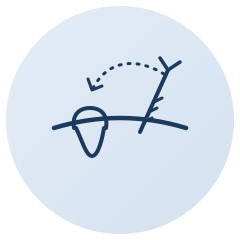
How TADs Support Orthodontic Tooth Movement
A temporary anchorage device, or TAD, is a small titanium screw placed in the bone of the upper jaw, lower jaw, or palate. It provides a fixed point that an orthodontist can use to move selected teeth with greater control.
Because the device is anchored in bone, it can provide support without relying entirely on other teeth. This can help the orthodontist move one tooth or group of teeth while limiting unwanted movement elsewhere.
When TADs May Be Recommended
An orthodontist may recommend a TAD to support movements such as:
- Moving molars forward or backward
- Intruding a tooth that has erupted too far
- Helping close an open bite
- Closing spaces between teeth
- Correcting a dental midline or uneven tooth position
- Uprighting a tilted molar
Not every orthodontic patient needs a TAD. The recommendation depends on the movement required, the position of the teeth and roots, bone availability, and the overall orthodontic plan.
TAD Placement Process
Our role in treatment focuses on planning and placing the temporary anchorage device according to the orthodontist’s treatment plan.
- Placement site evaluation: Dr. Exstrom reviews the requested placement site and evaluates the surrounding bone, teeth, and roots to plan a stable position for the device.
- Numbing and placement: The area is numbed before the small titanium device is placed through the gum tissue and into the bone. Sedation and anesthesia options can be tailored to the patient’s needs, preferences, and medical history.
- Orthodontic connection: The orthodontist connects the TAD to the selected tooth or appliance and directs the planned movement.
Recovery and Healing
Mild soreness or tenderness may occur after TAD placement and typically improves within a few days. Most patients can return to their normal routine quickly.
Clear post-operative instructions are provided for keeping the area clean, managing discomfort, and supporting proper healing.
Dental Insurance and Payment Options
Insurance coverage varies by plan and by patient. We are in-network with the majority of insurance providers to help estimate available benefits, but coverage verification does not guarantee payment. Treatment fees are reviewed during your consultation so you have a clear understanding of expected costs.
FAQs
Does getting a TAD hurt?
The area is numbed before placement, so you should not feel pain during the procedure. Mild soreness afterward is common and typically improves within a few days.
How long does the device stay in?
A TAD may remain in place for several months or longer, depending on the orthodontic movement it supports. The orthodontist monitors progress and determines when the device is no longer needed.
What happens if it becomes loose?
If the device becomes loose, contact your orthodontist rather than trying to adjust it yourself. Your orthodontist can evaluate it and determine whether it can be managed in their office or if you need to return to the oral surgeon for repositioning or replacement.
Will it leave a hole or scar after removal?
The area where the device was placed typically heals quickly after removal. The gum tissue closes naturally, and most patients do not notice any lasting change at the site.