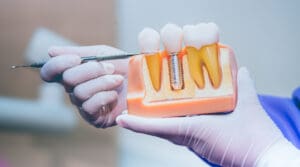
If you notice a sharp piece of bone sticking out of your gums after a tooth extraction or bone graft, it may be a bone spicule. These small bone fragments can work their way through the gums as the extraction site heals, kind of like a splinter in a finger. Although they can cause irritation or discomfort, bone spicules are often a normal part of healing and may resolve without treatment.
Table of Contents
Why Do Bone Spicules Form?
After a tooth is removed, the jawbone begins to heal and reshape around the empty socket. During this process, small fragments of bone may become exposed or gradually move toward the surface of the gums.
Bone spicules can develop for several reasons:
- Bone remodeling: As the jawbone changes shape during healing, small, sharp edges may become more noticeable.
- Fragments from extraction or bone graft material: Tiny bone fragments can occasionally remain after a tooth is removed and later work their way through the gums.
- Thin or irregular bone edges: Sharp areas of bone around the extraction site may become noticeable as the surrounding tissue heals.
Bone spicules can appear after routine extractions or more involved procedures, including wisdom teeth removal.
What Does a Bone Spicule Feel Like?
A bone spicule often feels like a small, hard, sharp point along the gumline. You may notice it when your tongue touches the area or when eating.
Common signs include:
- A sharp or rough spot protruding through the gums
- A small white or yellowish piece visible near the extraction site
- Irritation of the tongue, cheek, or surrounding gum tissue
- Localized tenderness or discomfort when chewing
An examination can help determine whether the area contains exposed bone, a loose fragment, or another healing concern.
Will a Bone Spicule Go Away on Its Own?
Small, loose bone spicules usually work their way out naturally as the gums heal. Others may remain attached to the jawbone or continue irritating the surrounding tissue.
There is no exact timeline for when a bone spicule will disappear. Some resolve within days or weeks, while others may require treatment.
Do not try to pull, scrape, or remove a bone spicule yourself. Doing so can injure the healing gums, cause bleeding, or introduce bacteria into the extraction site.
How Are Bone Spicules Treated?
Treatment depends on the size and location of the bone spicule, whether it is loose or attached, and how much discomfort it causes.
We may recommend:
- Monitoring: A small fragment that is not causing significant discomfort may resolve without treatment.
- Removing a loose fragment: If a bone spicule is accessible and causing irritation, we may be able to remove it during a brief office visit.
- Smoothing exposed bone: If a sharp edge remains attached to the jaw, we may smooth the area to help the gum tissue heal comfortably.
When treatment is necessary, we can often address the problem with a minor procedure using local anesthesia.
When Should You Have a Bone Spicule Checked?
A small bone spicule does not require urgent treatment. However, contact us if you notice:
- Persistent or worsening pain
- Swelling or redness around the extraction site
- Pus, drainage, or a persistent unpleasant taste
- A sharp bone fragment that repeatedly irritates your tongue or cheek
- Exposed bone that does not improve as the gums heal
Fever, increasing swelling, or severe pain should also prompt an evaluation. These symptoms may indicate a complication rather than a simple bone spicule.
FAQs
Can a bone spicule get infected?
A bone spicule can irritate the surrounding gums, but it does not usually cause an infection. Gentle warm saltwater rinses can help keep the area clean while it heals. If you notice increasing pain, swelling, or pus, contact our office.
Can bone spicules develop months after a tooth extraction?
Yes, bone spicules can sometimes appear several months after a tooth extraction. As the jawbone continues to heal and reshape, small bone fragments may gradually work their way to the surface of the gums.
Does removing a bone spicule hurt?
Removing a bone spicule is usually a quick, minor procedure. If the fragment is loose, we may be able to remove it easily. If it is still attached to the jawbone, local anesthesia can be used to keep you comfortable while we remove or smooth the sharp area.
Concerns About Healing After Tooth Extraction
If you’ve had a tooth extracted at Offshore Oral & Facial Surgery and notice something sharp in your gums, our team can evaluate the area and determine whether treatment is needed.
Led by Dr. Drake, our oral surgery practice provides personalized care and follow-up support for patients in San Marcos and Vista, CA. If you’re experiencing discomfort or have concerns about your recovery, contact us to schedule an evaluation.