Some pain, swelling, and changes in the extraction site are normal after having a tooth removed. The biggest difference between dry socket and normal healing is usually how your symptoms change. Normal discomfort should gradually improve, while dry socket pain often becomes more intense a few days after the extraction.
Table of Contents
Normal Healing Should Gradually Feel Better
After a tooth extraction, a blood clot forms in the empty socket and helps protect the underlying bone and nerves while the area begins to heal.
During the first few days, normal healing may include:
- Soreness around the extraction site
- Mild to moderate swelling
- Minor bleeding or blood-tinged saliva
- Jaw stiffness
- Tenderness when eating or opening your mouth
These symptoms can be more noticeable after a difficult extraction or wisdom teeth removal. What matters most is the overall pattern. Soreness and swelling should generally begin improving as recovery progresses.
Dry Socket Pain Usually Gets Worse
Dry socket, also called alveolar osteitis, can develop when the blood clot at the extraction site breaks down or is lost before the socket has had enough time to heal. This leaves the underlying bone and nerves less protected.
The most noticeable difference between dry socket and normal healing is often how the pain changes. When patients ask Dr. Drake “How do I know if I have a dry socket?”, he will typically respond with “Oh, you will know”. Instead of continuing to improve, pain from dry socket typically develops or becomes significantly worse a few days after the tooth was removed.
Dry socket pain may:
- Feel deep or throbbing
- Spread toward the ear, temple, or side of the face
- Become more intense after you initially seemed to be improving
- Respond poorly to the pain medication you were instructed to use
If your recovery seems to be progressing and then your pain suddenly becomes much worse, contact us at the office.
Dry Socket vs. Normal Healing
The appearance of an extraction site can vary considerably as it heals. Some visual differences may be noticeable, but how your pain and other symptoms change is often more useful than appearance alone.
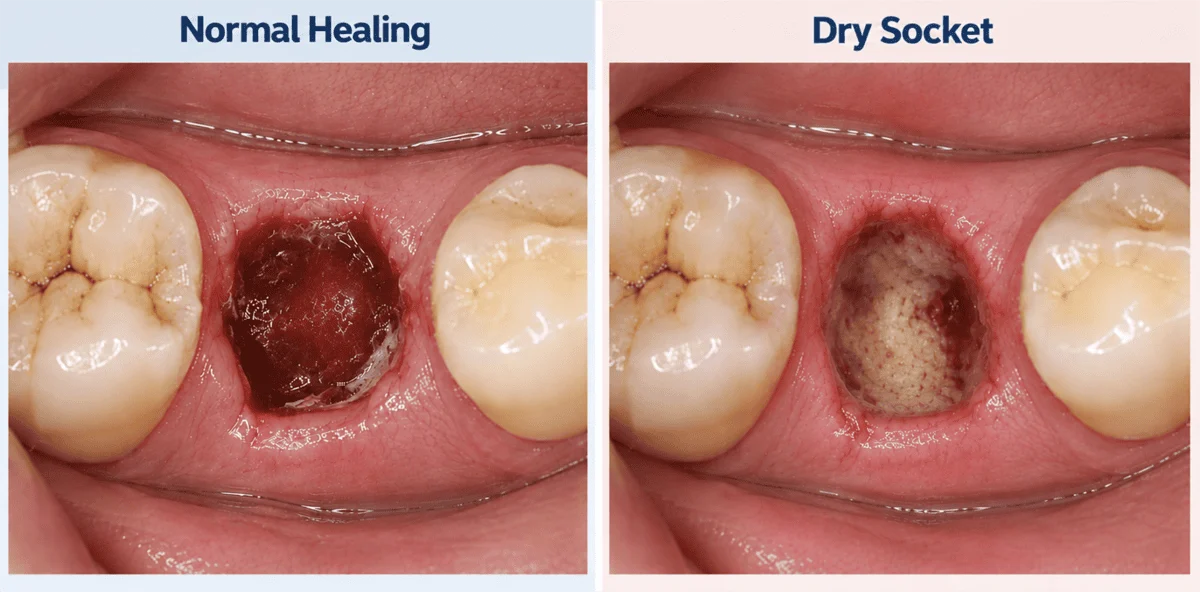
A socket that is healing normally may contain a dark blood clot at first and later develop whitish or yellowish tissue as new tissue forms. These changes do not necessarily mean something is wrong.
With dry socket, the socket may look empty because the blood clot is no longer present. In some cases, bone may be visible within the socket. However, pain and how your symptoms are changing can provide more useful clues than appearance by itself.
When Should You Contact Us?
Contact us if pain becomes significantly worse over 5 days after your extraction, particularly if you had started to feel better. You should also reach out if pain is severe, spreads toward your ear or face, or does not improve with the medication you were instructed to use.
If dry socket is causing your symptoms, treatment can help protect the area and manage discomfort while the socket continues to heal. We can also check for other problems that could cause worsening symptoms after an extraction.
FAQs
Does white tissue in a tooth socket mean dry socket?
No. A white or cream-colored layer over the extraction site can be a normal part of healing as the blood clot is gradually replaced by healing tissue. Dry socket is more often identified by worsening pain a few days after the extraction rather than by the color of the socket alone.
Can dry socket cause swelling?
Dry socket is usually associated more with worsening pain than significant swelling. If swelling is increasing rather than improving, especially if you develop a fever or other concerning symptoms, contact us so we can evaluate the extraction site.
Does dry socket heal on its own?
Yes. A dry socket will eventually heal as new tissue forms over the exposed bone, but treatment can make the recovery much more comfortable. If you develop worsening pain after an extraction, contact us so we can evaluate the area and provide treatment if needed.
Questions About Healing After an Extraction?
If you recently had a tooth removed at Offshore Oral & Facial Surgery and are unsure whether what you are experiencing is part of normal healing, give us a call. We can answer your questions and determine whether your extraction site needs to be evaluated.